
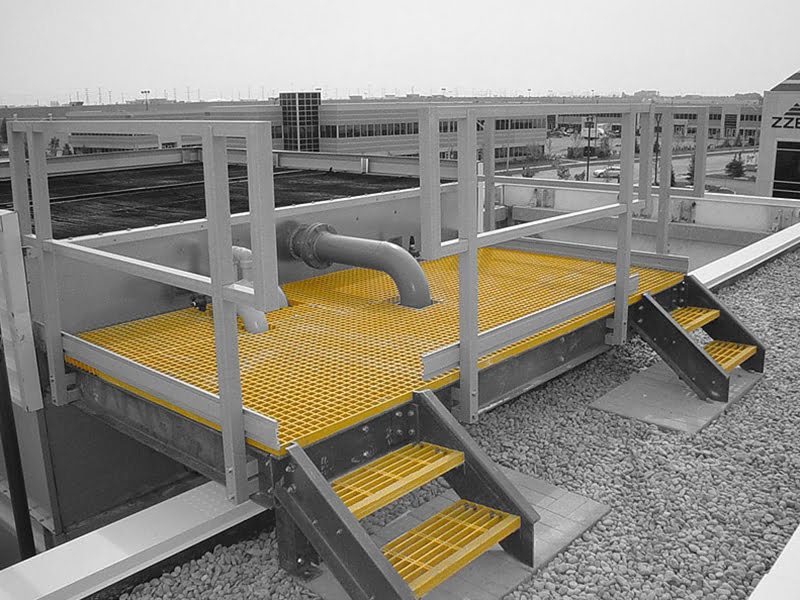
Installing GRP grating correctly is essential to ensure long-term performance, structural safety, and compliance with industrial standards. Whether used in chemical plants, offshore platforms, water treatment facilities, marine walkways, or general industrial flooring, proper installation directly affects the durability and stability of the system. This guide covers the best practices and professional tips for achieving safe, reliable, and efficient GRP Grating installations across various environments.
Understanding GRP Grating Before Installation
GRP (Glass Reinforced Plastic) grating is a composite flooring solution created from high-strength glass fibres and thermosetting resins. It is lightweight, corrosion-resistant, non-conductive, and highly durable, making it a preferred alternative to steel and timber flooring. Before installation, it is essential to understand which type of grating you are working with:
Moulded GRP Grating – Offers high impact resistance and excellent corrosion resistance. Pultruded GRP Grating – Provides superior load capacity and is suitable for longer spans.
Each type has specific installation requirements, so always confirm the manufacturer's specifications before beginning work.
Pre-Installation Planning and Site Assessment
Before installing any GRP system, conduct a comprehensive site assessment. This includes:
- Confirming load requirements and span lengths.
- Ensuring all supporting structures are level, stable, and capable of handling the intended loads.
- Verifying environmental conditions, such as exposure to chemicals, saltwater, or UV light.
- Planning accurate measurements to minimize waste and avoid unnecessary cutting on-site.
Proper planning reduces safety risks, ensures compliance, and prevents structural weakness caused by improper placement.
Accurate Measurement and Cutting Techniques
GRP grating can be easily cut on-site using standard tools, but accuracy is critical. Follow these guidelines:
- Use diamond-tipped or carbide tools for smooth, clean cuts.
- Mark all cutting lines clearly with non-permanent markers.
- Wear proper PPE, including goggles, gloves, and respirators, to prevent irritation from fiberglass dust.
- Ensure panels are positioned securely before cutting to avoid chipping or uneven edges.
Cutting should be done in a well-ventilated area to minimize dust exposure. After cutting, seal exposed edges with resin if recommended by the manufacturer.
Proper Panel Positioning and Alignment
Correct positioning is essential to ensure load distribution and prevent instability. Panels should be:
- Aligned with structural supports according to the engineering layout.
- Placed with equal spacing to allow for thermal expansion.
- Positioned so that the load is transferred evenly across the support structure.
- Installed with a slight gap between panels when required by the manufacturer.
Proper alignment reduces the risk of cracking, movement, or premature wear.
Secure Fixing and Fastening Methods
Fastening GRP grating correctly ensures safe access and prevents vibration, uplift, or displacement. Industry-standard clips include:
- M-Clips – Hold panel edges securely to the support frame.
- C-Clips – Join two adjacent panels for structural stability.
- W-Clips – Used for securing gratings with larger surface areas.
- L-Clips – Provide anchoring for smaller installations or low-load platforms.
Fasteners should always be corrosion-resistant, such as stainless steel, to ensure long-term durability. Install each clip according to spacing requirements—typically every 500 mm for most industrial applications.
Ensuring Slip Resistance and Surface Safety
Many GRP gratings feature a gritted surface to enhance slip resistance. During installation:
- Ensure the gritted surface faces upward and is free of dust or oils.
- Avoid dragging the grating to prevent abrasion of the slip-resistant coating.
- Inspect all walking surfaces after installation to confirm uniform grip.
Slip-resistant designs are essential in offshore, chemical, and marine applications where moisture, oil, or chemicals often create hazardous conditions.
Allowing for Thermal Expansion
GRP expands slightly under heat and contracts under cold conditions. When installing:
- Include small gaps (typically 3–6 mm) between panels.
- Avoid rigid, tightly fixed installations that restrict natural movement.
- Use manufacturer guidelines for local temperature variations.
Failure to allow for expansion may cause buckling, cracking, or misalignment over time.
Maintaining Structural Support Integrity
The supporting framework must be compatible with GRP grating installations. Follow these best practices:
- Ensure steel or concrete supports are stable, level, and corrosion-protected.
- Avoid installing GRP over uneven or damaged structures.
- Confirm that support spacing aligns with the recommended span for your grating type.
- Use additional supports for areas with heavy or dynamic loads.
Proper support ensures maximum lifespan and prevents deflection issues.
Inspection and Quality Assurance After Installation
Once the installation is complete, perform a full inspection. Look for:
- Misalignment or uneven surfaces.
- Loose or improperly installed fasteners.
- Inadequate spacing for expansion.
- Damaged edges or gritted surfaces.
- Insufficient support alignment.
A thorough inspection ensures compliance with safety regulations and reduces the risk of future maintenance problems.
Maintenance Tips for Long-Term Performance
Although GRP grating is low-maintenance, follow these tips for optimal performance:
- Clean periodically to remove dirt, chemicals, or salt buildup.
- Inspect fasteners regularly for loosening due to vibration or heavy traffic.
- Check for any structural shifts or support corrosion in the underlying framework.
- Replace damaged or heavily worn sections promptly to maintain safety.
Routine maintenance ensures long operational life and reduces repair costs.
Common Installation Mistakes to Avoid
Avoid these frequent errors to ensure a reliable installation:
- Not using the correct clips or insufficient fastening.
- Failing to allow for thermal expansion.
- Cutting without proper PPE.
- Ignoring manufacturer span guidelines.
- Installing grating over uneven or weak supports.
- Over-tightening fasteners, which may crack the surface.
Awareness of these mistakes minimizes future problems and enhances structural reliability.
Conclusion
Proper installation of GRP grating is essential for ensuring safety, durability, and long-term performance in industrial, chemical, offshore, and commercial environments. By following best practices—including accurate measurement, correct fastening, proper alignment, adequate spacing, and post-installation inspection—you can achieve a reliable and professionally executed GRP flooring system. Adherence to manufacturer specifications and industry standards ensures that your grating remains stable, slip-resistant, and structurally sound for many years.