A shipping robot can move a box across a warehouse and still fail the job at the loading bay. The next stage of automation will depend on handoffs, safety, battery use, and proof from real sites, not a polished route demo.
- The dock is harder than the warehouse floor.
- Teleoperation may cover rare problems.
- Buyers need site data before signing a large order.
The handoff decides the job
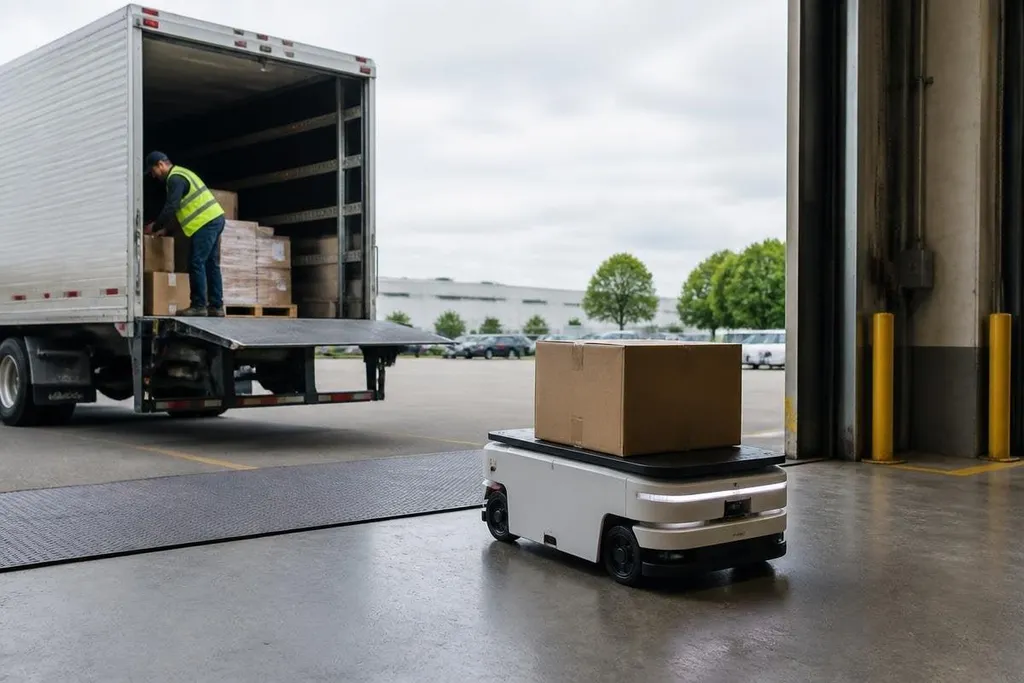
A robot that carries a parcel from storage to a packing station controls only part of the work. A person, conveyor, lift, or truck still has to receive that parcel, and each handoff adds a chance for delay or damage.
That makes the dock a useful test. The robot must find the right bay, stop in a safe place, pass the load to another system, and recover when a door, pallet, or person blocks its route. A route that works in an empty test area says little about that process.
The same issue applies outside warehouses. A delivery robot may reach a building but still need a person to open a door, carry the parcel upstairs, or confirm the recipient.
The robot's useful task ends only when the package reaches the agreed handoff point.
Autonomy will have limits
Shipping sites change by the hour. Pallets move, floors get wet, trucks arrive at different angles, and people cross marked paths. Sensors such as LiDAR can map nearby objects, while cameras help classify them, but the robot still needs rules for uncertain cases.
Teleoperation may cover those cases. In that setup, a remote operator takes control when the robot cannot safely choose its next move. This can keep work moving, but it also shifts part of the cost from the robot to the person watching the fleet.
The useful question is not whether a robot can work without people. It is how often people must step in, how long each intervention takes, and what happens when the network connection drops. Those figures belong in a buyer's trial report.
Before a shipping robot earns a place on a route, its battery time, payload, and weather limits need to sit beside the test result. Robot24.com shipping robot reports can tie those figures to a named machine and site, so you can judge whether the result fits the route ahead.
Batteries, payload, and weather
A shipping robot needs enough battery for its route, its payload, and the time spent waiting. A robot that carries 20 kg on paper may carry less when it must climb a ramp, stop often, or work on rough ground.
Outdoor systems face more limits. Rain can affect sensors, cold can reduce battery output, and bright sunlight can change what cameras see. A safe charging plan must fit the site's work hours.
These details affect the number of robots a site needs. If one robot spends too much time charging or waiting for help, a buyer may need extra units to cover the same work. The purchase price is only one part of that calculation.
What buyers should demand
No model, price, deployment count, date, or test result was supplied for this topic. That means a precise forecast would be made up. A sound purchase decision needs records from the intended site, with the robot carrying the loads and using the routes it will face after installation.
Use this checklist before a trial:
- Name the handoff: record the exact point where the robot gives the parcel to a person or machine.
- Measure interventions: count every remote control event and record the time spent on each one.
- Test the payload: run the robot with the heaviest normal load, not an empty tote.
- Check charging: compare charge time with the site's busiest work period.
- Set failure rules: define what the robot does after a blocked route, lost connection, or sensor fault.
- Price the whole system: include charging gear, site changes, software fees, support, and spare parts.
The next useful proof
Shipping robots will move forward when makers publish repeatable site results. Buyers need the route, payload, battery time, intervention rate, safety process, and cost for each completed task.
I'd wait for that evidence before treating a shipping robot as ready for a busy dock. The open question is simple: how many parcels can it move through a real handoff before a person has to take over?